Entering the Mixed-Reality Race
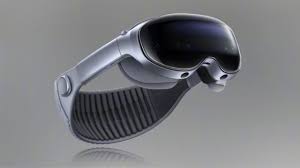
Vivo, a well-known smartphone brand, has officially entered the extended reality (XR) market with the unveiling of its first mixed-reality headset the Vision Discovery Edition. The device was presented on 22 August 2025 during the company’s 30th anniversary event in Dongguan, China, a city that plays a key role in electronics manufacturing and sits close to Shenzhen.
This move places Vivo alongside global giants such as Apple, Meta, and Samsung, who are already investing heavily in immersive technology.
Design: Smaller and Lighter than Rivals
One of the most notable aspects of the Vision Discovery Edition is its lightweight structure. Weighing 398 grams, with dimensions of 83 mm in height and 40 mm in thickness, Vivo claims the headset is 26% smaller than the industry average.
The device is constructed using metal, glass, fabric, and plastic, combining durability with a premium feel. To enhance comfort, Vivo offers four different light seal sizes and eight types of foam padding, making it adaptable to varied users.
Cameras are placed on the front of the headset, while a rotating crown lets wearers adjust the display’s opacity with ease.
Advanced Capabilities
Vivo has designed the Vision Discovery Edition to deliver both Augmented Reality (AR) and Virtual Reality (VR), blending the real and virtual worlds.
Key highlights include:
- MicroOLED screens with high pixel density for sharp visuals.
- Eye-tracking sensors that let users navigate menus with their gaze.
- Gesture-based controls for three-dimensional interaction using hands and fingers.
- Support for 3D video recording and spatial photography (compatible with select Vivo smartphones).
- A separate battery pack, the size of a phone, that powers the headset for up to two hours.
Vivo’s XR Vision
During the launch event, Vivo emphasized its belief in extended reality as a major step toward the future of personal computing. The company envisions a time when face-worn devices will work alongside, or even replace, smartphones and PCs.
This idea is in line with the spatial computing push already being advanced by Apple and Meta.
Market Response and Industry Insights
Analysts have responded cautiously to Vivo’s announcement.
- Ben Wood (CCS Insight) pointed out that while spatial computing is an exciting field, its adoption is slower than expected. He noted that Vivo’s device may not have an immediate large-scale impact.
- Runar Bjørhovde (Canalys) highlighted that the launch demonstrates Vivo’s R&D progress, showing that the company is ready to take calculated risks even if short-term sales remain modest.
Rollout Strategy
Vivo has chosen a phased release strategy instead of a direct commercial launch. The headset will first be available in demo zones across selected Chinese cities, allowing the company to gather insights from both users and developers before making it widely available.
This approach focuses on ecosystem building and product refinement before mass distribution.
Challenges for Adoption
Despite its promising features, the Vision Discovery Edition faces several hurdles common to all mixed-reality devices:
- High production and consumer costs
- Short battery life (two hours)
- Limited availability of apps and productivity tools
- Unclear integration with existing smartphones and PCs
Future progress in battery technology, display innovation, and app ecosystems will be crucial for widespread adoption.
Conclusion
The Vision Discovery Edition marks Vivo’s bold step into the mixed-reality arena, putting the company in direct competition with Apple’s Vision Pro and Samsung’s Project Moohan. While the market is still in its early stages, Vivo’s focus on lightweight design, user comfort, and gradual rollout reflects its ambition to shape the future of immersive computing.